


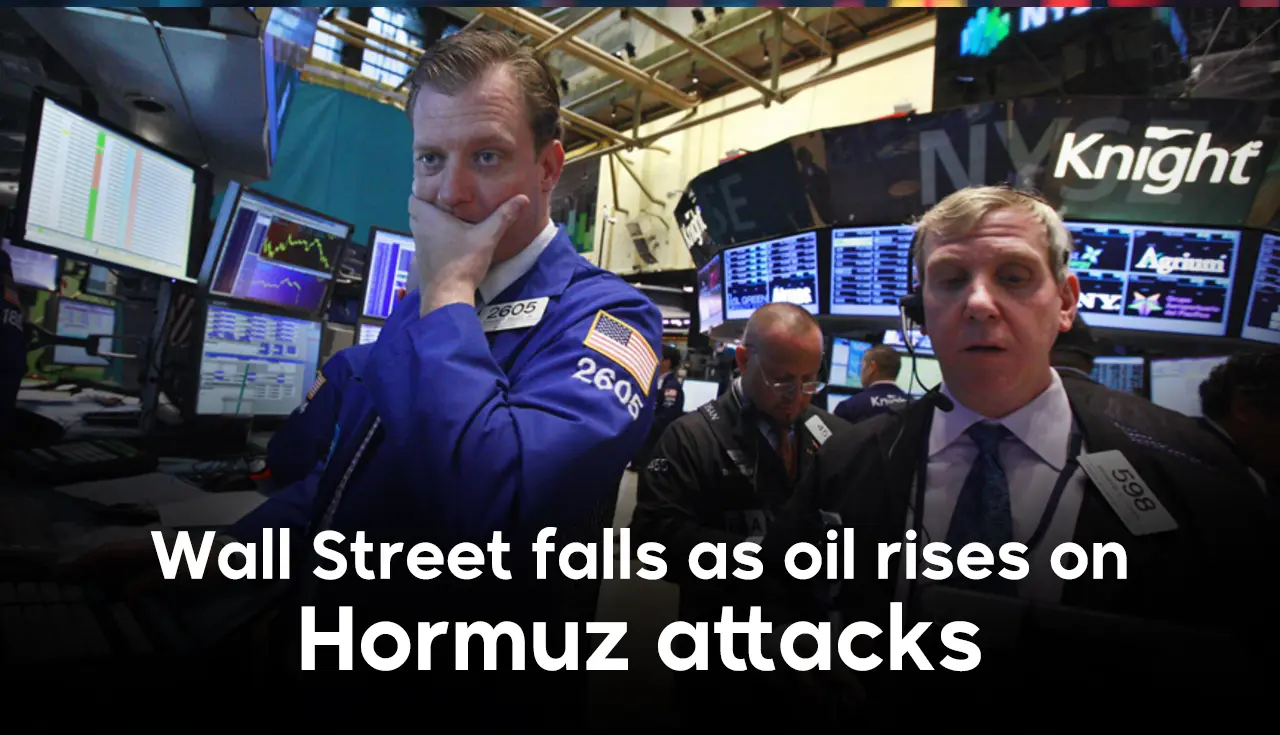
US stock index futures declined during today’s trading as oil prices continued to climb following escalating security tensions in the Gulf after attacks on shipping vessels near the Strait of Hormuz. These developments revived market concerns about the stability of global energy supplies, quickly affecting investor risk appetite.
At the futures level, S&P 500 futures fell about 0.9% to 6,721.75 points, while Nasdaq 100 futures declined by the same percentage to 24,760.75 points. Meanwhile Dow Jones futures dropped about 1% to reach 46,964 points, reflecting the cautious tone among market participants as energy prices surged.
Wednesday’s regular trading session ended with mixed performance across US markets. The Dow Jones Industrial Average declined around 0.6%, while the S&P 500 closed slightly lower by 0.1%. The Nasdaq Composite managed to post a modest gain of 0.1%, supported by some technology stocks.
The US dollar maintained trading close to its strongest levels since the beginning of the year during Thursday’s session, supported by growing demand for safe haven assets as oil prices climbed and geopolitical tensions intensified in the Gulf region. This environment is raising concerns among investors about a potential return of inflationary pressures, which could prompt global central banks to adopt a more hawkish monetary stance in the coming months.
Commodity linked currencies were also under pressure. The Australian dollar slipped to 0.7148 dollars while the New Zealand dollar declined to 0.5907 dollars. The British pound also weakened to 1.3385 dollars as investors increasingly favored the US dollar amid rising uncertainty in global markets.
At the same time, investors continue to monitor US inflation data closely. The Consumer Price Index rose by 0.3% in February on a monthly basis while annual inflation held near 2.4%, a level broadly aligned with market expectations.
Although the data suggests inflation pressures remain relatively stable, the continued rise in energy prices could add new inflationary pressures in the months ahead. Markets are therefore watching weekly initial jobless claims due Thursday along with the Personal Consumption Expenditures index scheduled for release Friday, which is the Federal Reserve’s preferred gauge for assessing inflation and guiding monetary policy.
Oil prices surged sharply by more than 7% during Asian trading on Thursday following reports that two international oil tankers were attacked in the northern Persian Gulf near Iraq and Kuwait. These incidents are part of a series of attacks targeting vessels passing through the Strait of Hormuz, one of the most important oil transit routes in the world, increasing fears of supply disruptions.
Brent crude rose around 6.9% to reach 98.30 dollars per barrel at the start of Asian trading despite the International Energy Agency announcing plans to release about 400 million barrels from strategic reserves in an attempt to ease price pressures. The Cboe oil volatility index also climbed significantly to 121.01, marking its highest level since 2020 during the early phase of the global pandemic, reflecting growing anxiety in energy markets.
Despite the International Energy Agency’s plan to release emergency reserves and the United States announcing the release of around 172 million barrels from its Strategic Petroleum Reserve, geopolitical risks remain the dominant factor driving oil price movements. Iranian officials have warned that oil prices could reach as high as 200 dollars per barrel if military escalation continues or if shipping disruptions expand in the region.
Economists caution that sustained increases in oil prices could push global energy costs higher and weigh on economic growth, particularly if tensions persist for an extended period. The longer the conflict lasts the greater the likelihood that the energy price shock spreads across broader sectors of the global economy.
US President Donald Trump stated that the United States is in a strong position in the confrontation with Iran and indicated that Washington is closely monitoring developments around the Strait of Hormuz. However intelligence assessments cited by informed sources suggest that Iran’s leadership structure remains largely intact despite continued military strikes over the past two weeks.
Currency analysts believe markets should prepare for a period of heightened volatility in energy prices. The strategic importance of the Strait of Hormuz extends beyond oil flows to include shipments of liquefied natural gas and fertilizer related products. Any prolonged disruption in maritime traffic through the strait would likely sustain upward pressure on global energy prices.
Stay informed about global markets through our previous analyses. and Now, you can also benefit from LDN company services via the LDN Global Markets trading platform.


