


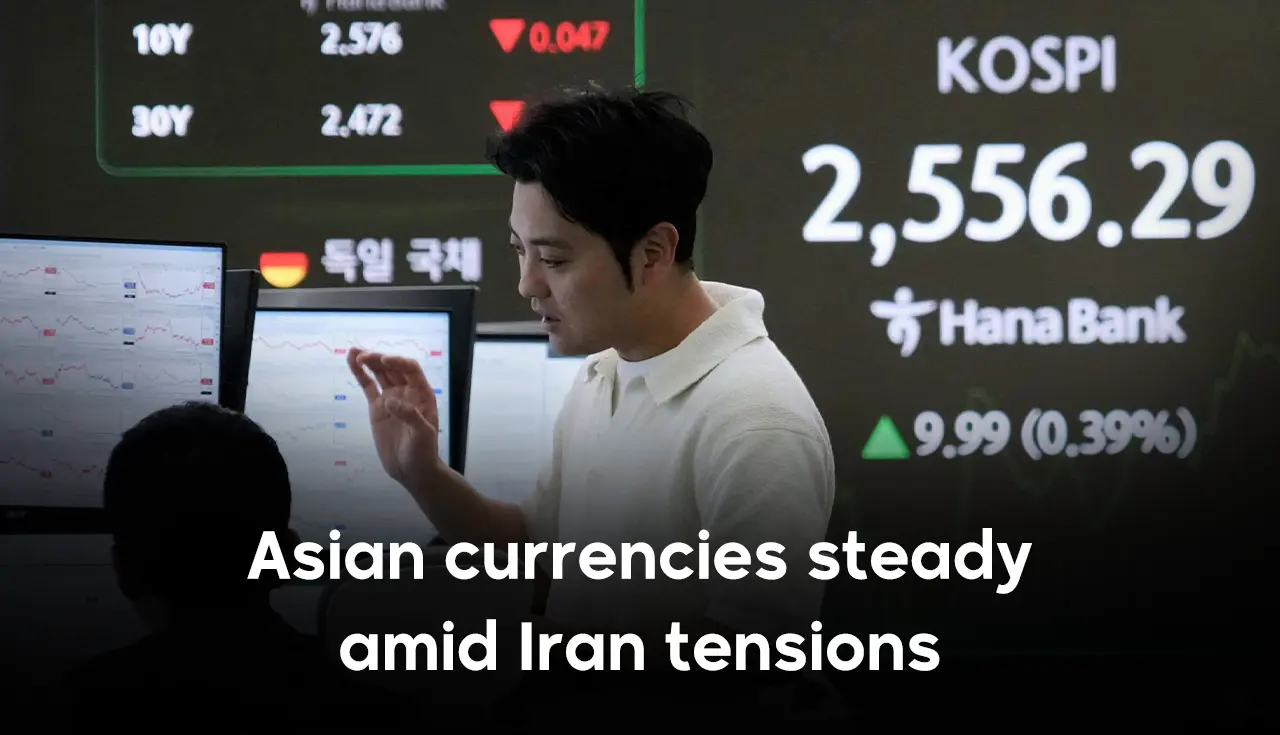
Most Asian currencies traded within narrow ranges on Wednesday amid a cautious market sentiment, as investors continued to grapple with mixed signals regarding the ongoing conflict involving the United States, Israel, and Iran, while also awaiting the release of U.S. inflation data for February later in the day. This uncertainty prompted many traders to temporarily reduce their positions until the trajectory of the U.S. economy and monetary policy becomes clearer.
Most Asian stock markets posted modest gains on Wednesday, supported by a pullback in oil prices from their recent highs. Wall Street indices had ended the previous session largely unchanged, while U.S. futures edged slightly higher during Asian trading hours.
Regionally, the Japanese market led the gains, with the Nikkei 225 rising over 2%, and the broader Topix index climbing around 1.7%. South Korean stocks also performed strongly, as the KOSPI surged about 4% following significant gains in the previous session. Despite this improvement, a sense of caution remains across the region, particularly due to ongoing concerns over the impact of rising energy prices on global inflation an issue of heightened importance for Asian economies heavily reliant on oil and gas imports.
The Australian dollar was the strongest performer among regional currencies, approaching a four year high against the U.S. dollar, fueled by growing bets that the Reserve Bank of Australia may tighten monetary policy in its upcoming meeting next week. This comes amid mounting concerns over renewed inflationary pressures stemming from higher energy prices linked to geopolitical tensions in the Middle East.
Reserve Bank of Australia Deputy Governor Andrew Hauser indicated that next week’s meeting would involve a serious discussion on interest rate decisions. Westpac analysts expect a 25 basis point rate hike in both the March and May meetings, citing inflationary risks associated with rising oil prices. Some economists believe the energy shock may have a strong short-term impact but could be temporary, potentially leaving room for the RBA to hold rates steady if pressures ease in the coming months.
In contrast, the Japanese yen showed weaker performance after producer price inflation data came in below expectations, raising further questions about the Bank of Japan’s ability to pursue tighter monetary policy in the near term. Although the Q4 GDP revision was positive, its effect on the yen remained limited.
Other Asian currencies also moved in narrow ranges. The Singapore dollar slipped slightly against the U.S. dollar, while the South Korean won gave up some of its earlier weekly gains. The Chinese yuan saw minimal movement after the People’s Bank of China set a strong reference rate, and the Indian rupee remained close to its recent levels.
Geopolitical developments continue to be the dominant factor influencing market sentiment, particularly following escalating tensions in the Strait of Hormuz, through which about one-fifth of global oil trade passes. Iran has declared its intention to continue targeting vessels passing through the strait in response to U.S. and Israeli military operations, raising growing concerns over energy supply stability.
Despite statements from U.S. President Donald Trump suggesting a potential end to the conflict, Tehran quickly denied these assessments, emphasizing that the decision to end hostilities rests with Iran. Against this backdrop, Asian currency markets remain highly sensitive to any new developments, especially in economies heavily dependent on energy imports such as Japan, South Korea, India, and Singapore, while China appears relatively better positioned to absorb short-term supply disruptions.
Stay informed about global markets through our previous analyses. and Now, you can also benefit from LDN company services via the LDN Global Markets trading platform.


