


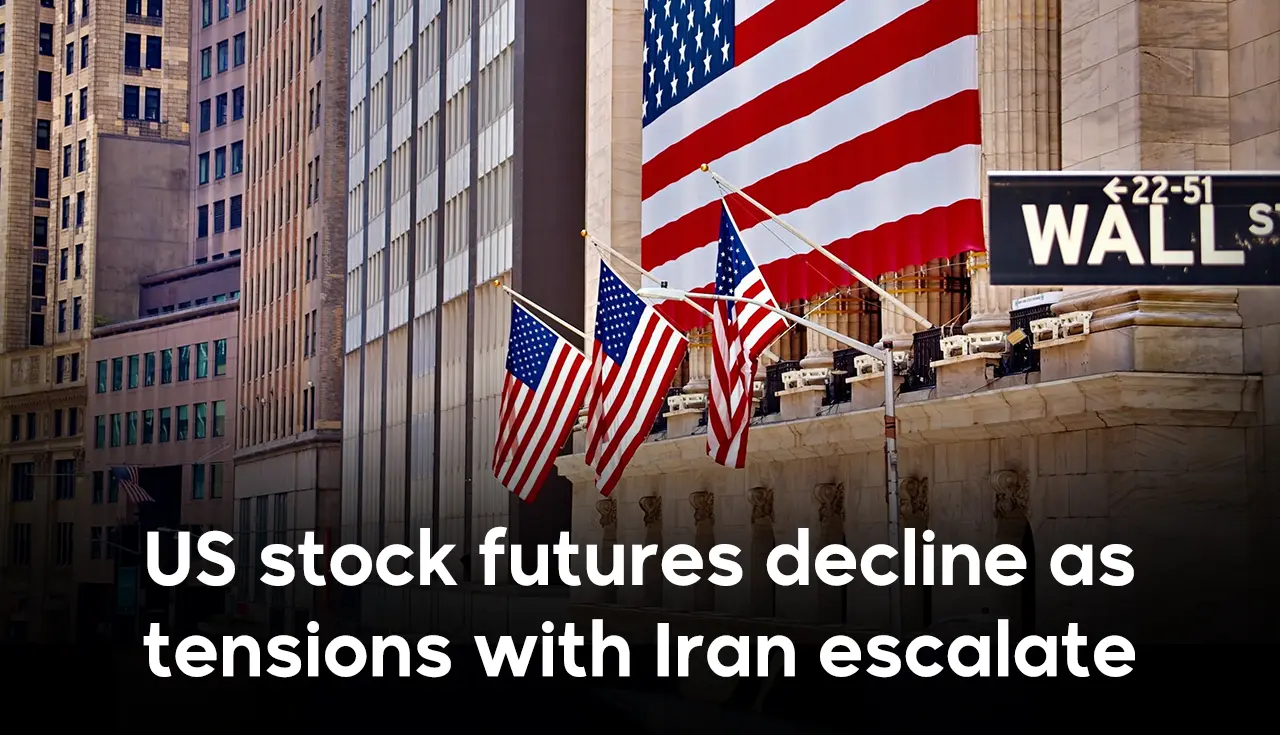
U.S. stock index futures declined today amid ongoing military tensions in the Middle East, with no clear signs of de escalation, heightening caution in the markets. Investors fear that a prolonged conflict could increase inflationary pressures, especially with the potential impact on global energy supplies.
This pullback follows a weak session on Wall Street, where the three major indices closed notably lower, reflecting limited risk appetite among investors. Additionally, anticipation ahead of a series of key economic data releases this week led traders to reduce their positions.
S&P 500 futures fell by approximately 0.15% to around 6,815 points, while Nasdaq 100 futures dropped by the same percentage to 24,718 points. Dow Jones Industrial futures fell to 48,491 points.
On the geopolitical front, the escalation between the U.S., Israel, and Iran entered its fifth consecutive day, with military strikes on Tehran continuing late into Tuesday evening. In response, Iran targeted several U.S. allied Gulf states, and reports indicated that the U.S. embassy in Saudi Arabia was attacked earlier.
Market concerns are currently focused on the impact of this escalation on energy markets, as any major disruption in supply could push oil and gas prices higher, directly affecting global inflation. Oil prices have already seen significant gains in recent days amid growing supply concerns.
If energy prices remain elevated for an extended period, this could further intensify global inflationary pressures, potentially slowing economic growth and forcing major central banks to adopt tighter monetary policies. Although Brent crude futures retraced some of their gains following these developments, they remain up roughly 12% since the beginning of the week.
In an effort to contain volatility in energy markets, U.S. President Donald Trump urged insurance companies to provide coverage for maritime shipping risks in the Gulf region. He also noted that the U.S. Navy might escort oil tankers through the Strait of Hormuz if necessary.
On Wall Street, the indices ended Tuesday lower but stayed slightly above the session lows. The S&P 500 fell about 0.9% to close at 6,816.63 points, the Nasdaq Composite declined 1% to 22,516.69 points, and the Dow Jones Industrial lost roughly 0.8% to close at 48,501.27 points.
Investors are also awaiting a series of U.S. labor market reports this week, which could provide additional signals on the economy’s trajectory. Expected releases include February job cuts from Challenger, weekly unemployment claims on Thursday, and the highly anticipated nonfarm payroll report on Friday, the key indicator of labor market strength.
These data releases are particularly important because of their direct link to monetary policy expectations. Any significant surprises in the labor market could prompt investors to reassess the path of interest rates in the coming months.
Amid rising energy prices and concerns over renewed inflationary pressures, traders have scaled back bets on an imminent Federal Reserve rate cut. Current market estimates indicate that interest rates may remain unchanged at least until mid year, specifically July, according to CME FedWatch data.
The U.S. dollar strengthened notably during early Wednesday Asian trading, reaching its highest level in nearly three months, benefiting from increased demand amid Middle East tensions. The escalation led investors to reduce exposure to the euro, amid growing fears of rising energy costs and their direct impact on the Eurozone economy.
The euro fell slightly by around 0.1% to trade at $1.1604, marking its third consecutive day of losses after hitting its lowest level since late November. This decline followed data showing that Eurozone inflation rose faster than expected in February, prior to the military escalation with Iran.
George Saravelos, Head of Global FX Research at Deutsche Bank, stated that the impact of the war with Iran on the EUR/USD pair is primarily linked to energy. He added that markets are currently facing a supply shock, representing a direct cost to European economies, which will have to spend more dollars on energy imports.
Globally, trading on Tuesday reflected a clear defensive pattern amid rising concerns of a new inflation wave driven by higher energy prices. This shift followed strikes by the U.S. and Israel on targets within Iran, prompting investors to reduce risk and move toward liquidity.
In currency markets, the U.S. Dollar Index remained near 99.10 points, its highest level since late November, indicating continued demand for the dollar as a safe haven amid geopolitical tensions. Against the Japanese yen, the dollar eased slightly by 0.1% to trade around 157.55 yen.
In commodity linked currencies, the Australian dollar declined 0.1% to $0.7028 despite better than expected Q4 economic growth data. The New Zealand dollar fell to $0.5886, while the British pound edged down slightly to $1.3340.
In digital assets, cryptocurrencies showed relatively positive movement, with Bitcoin rising 0.7% to trade near $68,533, and Ethereum increasing about 1.1% to around $1,991.
Stay informed about global markets through our previous analyses. and Now, you can also benefit from LDN company services via the LDN Global Markets trading platform.


