


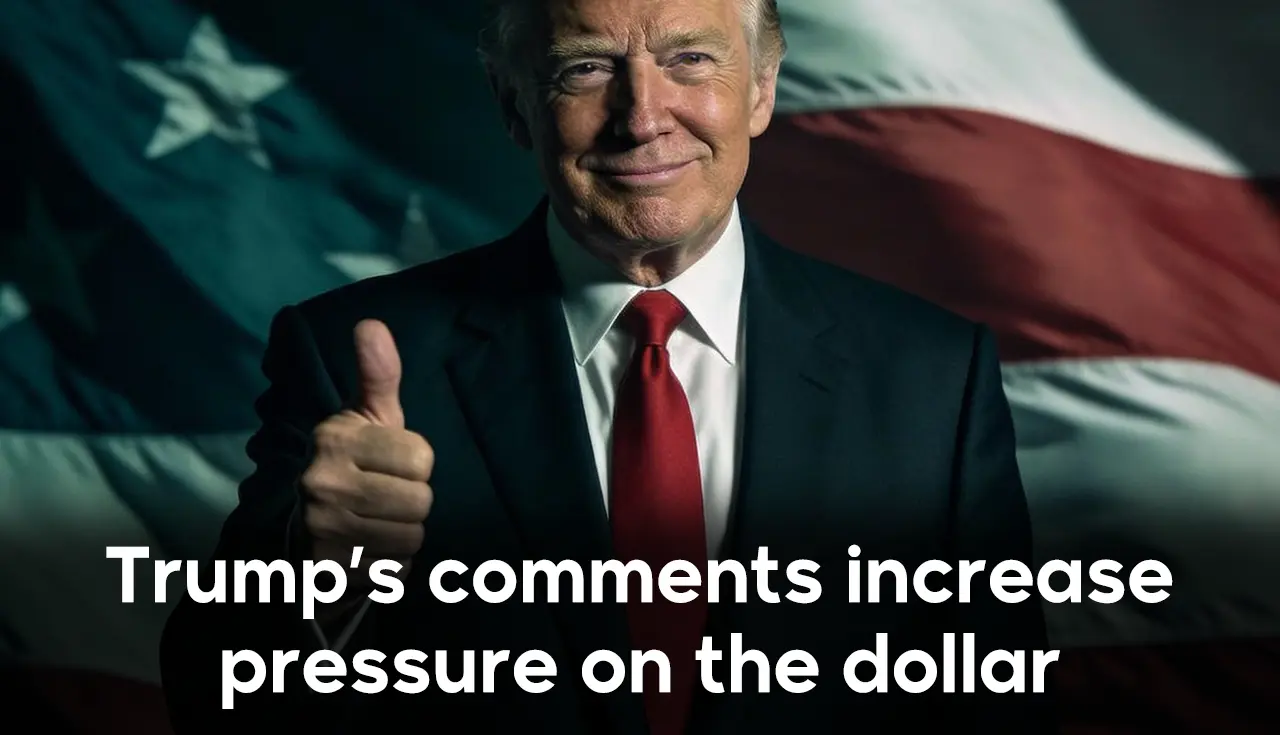
The U.S. dollar is trading near its lowest levels in almost four years, as persistent selling pressure weighs on the currency following remarks by President Donald Trump that downplayed the significance of its recent weakness. Markets interpreted the comments as implicit acceptance of a softer dollar ahead of the Federal Reserve’s policy decision.
Currency markets are still absorbing the impact of a sharp dollar sell off in the previous session, which pushed the euro above the 1.20 level for the first time since 2021 before the pair showed signs of technical consolidation. Meanwhile, sterling has remained close to multi year highs, despite limited profit taking after its recent strong rally.
The dollar index has attempted a modest rebound from its annual low, but the move has so far lacked sufficient momentum to alter the broader trend, particularly after the index touched its weakest level in four years. Trump’s remarks describing the dollar as “strong” and naturally fluctuating reinforced market expectations that the U.S. administration does not view currency weakness as an urgent concern, encouraging further dollar selling.
These developments come amid growing speculation over the possibility of coordinated intervention by U.S. and Japanese authorities to stabilize the yen, adding another layer of caution to currency markets. Overall, the environment reflects a clear deterioration in investor confidence toward the dollar, driven by ongoing uncertainty surrounding U.S. trade and economic policies, concerns over the Federal Reserve’s independence, and rising public spending.
Having lost more than 9% last year, the dollar has started the current year on weak footing, as investors remain uneasy about the administration’s unpredictable approach to trade and international diplomacy. Market attention is now firmly focused on the Federal Reserve’s policy decision, with expectations that interest rates will remain unchanged, potentially extending the pause beyond upcoming meetings chaired by Jerome Powell.
Additional political factors are also weighing on sentiment, including discussions around a potential successor to the Fed chair and political pressure that continues to cloud the outlook for U.S. monetary policy independence.
In contrast, the Japanese yen has benefited from dollar weakness, rising to its strongest levels in several months amid talk of joint monitoring of exchange rates by Tokyo and Washington often viewed as a precursor to official intervention. However, investors remain skeptical about the long term effectiveness of any such action, particularly as Japan relies on expanded stimulus measures ahead of upcoming elections.
Among commodity linked currencies, the Australian dollar found support from stronger than expected inflation data, reviving expectations of tighter monetary policy, although movements remain sensitive to broader dollar dynamics. The New Zealand dollar, meanwhile, continued to underperform amid prevailing risk aversion.
Overall, the technical outlook for the U.S. dollar remains skewed to the downside. Unless there is a clear shift in political rhetoric or monetary policy direction, any near-term rebounds are likely to be corrective rather than the start of a sustained recovery.
Stay informed about global markets through our previous analyses. and Now, you can also benefit from LDN company services via the LDN Global Markets trading platform.



The U.S. dollar seems to be struggling lately, and it’s fascinating how these political comments from Trump can have such a big impact on currency movements. I wonder how the Fed will respond to this pressure moving forward.
You’ve built a lot of trust through your consistency.
This was so insightful. I took notes while reading!
It’s refreshing to find something that feels honest and genuinely useful. Thanks for sharing your knowledge in such a clear way.
I appreciate you sharing this blog post. Thanks Again. Cool…
I appreciate you sharing this blog post. Thanks Again. Cool…
I appreciate you sharing this blog post. Thanks Again. Cool bro
I appreciate you sharing this blog post. Thanks Again. Cool bro
I appreciate you sharing this blog post. Thanks Again. Cool bro Slot Gacor
I appreciate you sharing this blog post. link gacor Thanks Again. Cool bro
I appreciate you sharing this blog post. kampungbet link gacor terbaik