

Political pressure hits the dollar as the yen sinks to its weakest since July 2024

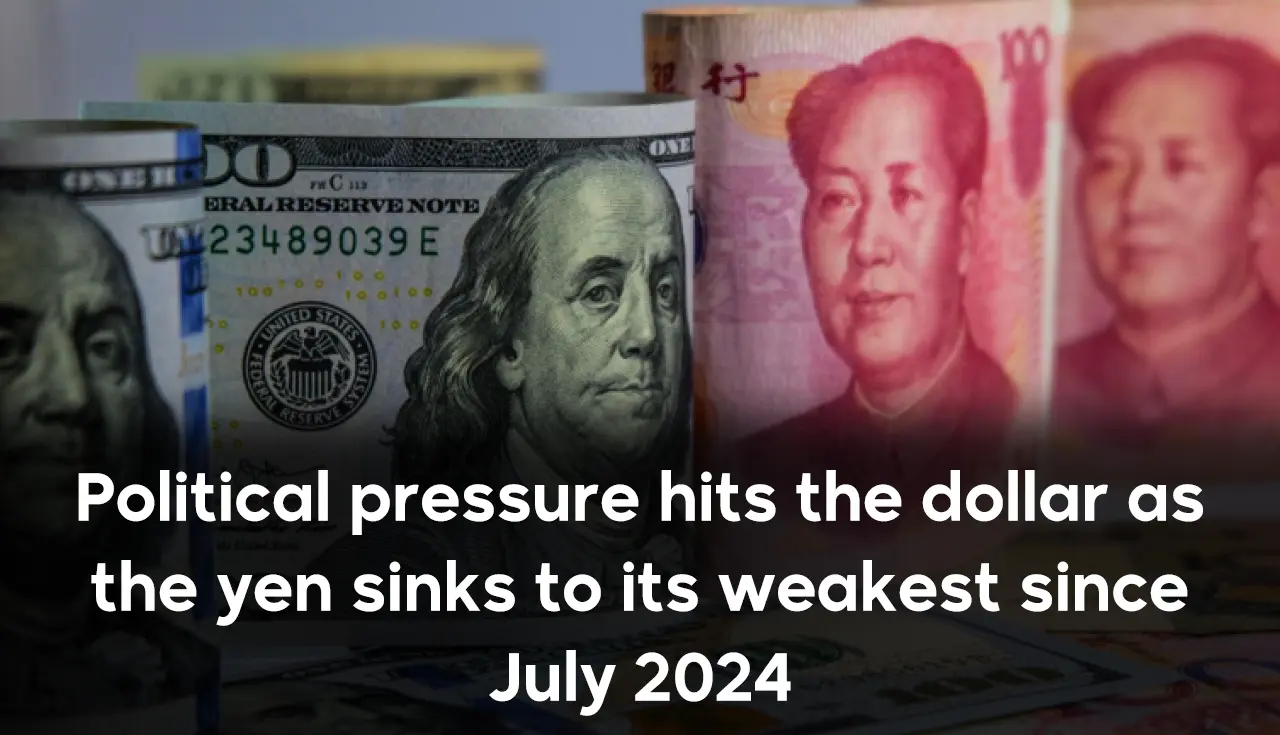
The U.S. dollar declined during the European trading session, influenced by unusual political and legal developments involving the Federal Reserve, which reignited fundamental questions about the independence of monetary policy in the United States.
This decline came after a criminal investigation was opened against Federal Reserve Chair Jerome Powell, which quickly impacted the performance of the dollar. The DXY index fell to around 98.46, threatening to end a five-day winning streak amid waning investor confidence in the U.S. monetary landscape.
Powell clarified that the pressures stem from threats of criminal charges related to testimony he gave before Congress last summer regarding the development of a Federal Reserve building. He emphasized that the case goes beyond him personally, touching on the core independence of interest rate decisions free from political influence.
Markets view these developments as a new escalation in the ongoing conflict between the Trump administration and the Federal Reserve, adding an element of uncertainty to the monetary policy path at a time when markets are increasingly sensitive to any signals that might undermine the credibility of the central bank.
From a financial market perspective, the bond market remains the most influential factor in determining the dollar’s next direction. A repricing of expectations for interest rate cuts on short term maturities, or a widening of spreads on long-term ones, could place additional pressure on the U.S. currency if concerns over the Fed’s independence intensify.
Attention is now turning to U.S. inflation data for December, one of the last major economic checkpoints before the Federal Reserve meeting at the end of January. Any surprise in inflation figures could reshape interest rate expectations, provided political uncertainties ease.
Despite these pressures, some analysts still see structural support for the dollar, notably weaker expectations for rate cuts compared to other major economies, which keeps the U.S. currency supported over the medium term, with positive momentum expected to continue through 2026.
Meanwhile, the Japanese yen continued its decline, reaching its weakest levels in over a year during the Asian session. The yen led losses among major currencies, dropping below 158.9 against the dollar, its lowest since July 2024. This drop followed local reports that Japanese Prime Minister Sanae Takaichi informed party leaders of her intention to dissolve the House of Representatives with the start of the next parliamentary session on January 23, bringing the prospect of early elections sharply back into focus.
The yen had already been under cumulative pressure since the beginning of the week after comments from Innovation Party leader Hirofumi Yoshimura hinted at the possibility of calling an early general election. These developments prompted markets to price in a scenario of an expanded ruling coalition in the House, which could give the government more flexibility to adopt more expansive fiscal policies and potentially push for additional monetary easing a traditionally negative factor for the yen.
The Japanese currency also extended losses against a broad basket of currencies, hitting historic lows against the euro and Swiss franc, and reaching its weakest level versus the British pound since 2008, reflecting the widening scope of pressure.
Market reactions were relatively limited, with light selling of the dollar and U.S. Treasuries, while some investors moved into gold as a hedge, without repeating the panic waves seen after the widespread tariff announcements in April. This behavior suggests that markets view these developments as political pressure rather than immediate drivers of sharp monetary policy changes.
From a broader perspective, while these developments have not led markets to fundamentally change their expectations for U.S. interest rates this year, they have reignited sensitive questions about the independence of the Federal Reserve, a key pillar in assessing U.S. sovereign risk. In this context, Fitch Ratings confirmed that central bank independence remains a key support factor for the United States’ credit rating.
Regarding commodity linked currencies, the Australian dollar remained largely unchanged, while the New Zealand dollar gained slightly, supported by improved business confidence in Q4, compared to a slight decline in Australian consumer confidence amid renewed concerns over interest rates and economic outlook.
Stay informed about global markets through our previous analyses. and Now, you can also benefit from LDN company services via the LDN Global Markets trading platform.



Yeah bookmaking this wasn’t a bad decision outstanding post! .